

Service 01 · Skilled nursing
Nursing HomeCare, Around the Clock
For residents who need licensed nursing every day — whether it's a few weeks of rehabilitation after a hospital stay or long-term care with dignity, comfort, and a team that knows them by name.
Nursing
Licensed nurses on duty 24 hours a day
Rehab
Physical, occupational & speech therapy
Stays
Short-term rehab and long-term care
Specialized
Memory care, hospice & respite care
Overview
What is a nursing home?
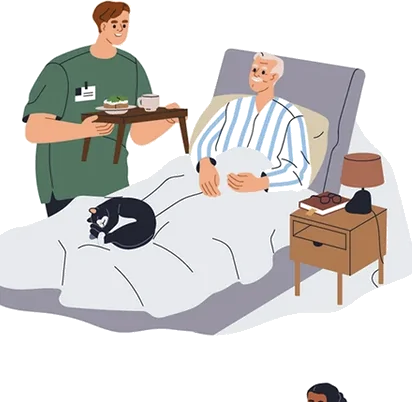
A nursing home — also called a skilled nursing facility, or SNF — is a licensed facility that provides a wide range of health and personal care services for people who need help with chronic conditions but do not need to be in a hospital.
Nursing homes offer around-the-clock care for people who can no longer live independently and have a skilled nursing need, such as chronic illnesses or injuries that require ongoing medical supervision. Nursing homes focus more on medical care than assisted living or board and care homes do.
Nursing homes are licensed and certified by the state according to federal Medicare criteria, and provide both basic and skilled nursing care — for short-term rehabilitation after a hospital stay, or for long-term care.

Our approach
Every resident has a care plan built with them and their family — and reviewed as needs change.
Is it the right fit?
Signs a nursing home may be the right level of care
A nursing home is usually the right choice when someone needs licensed nursing or daily therapy — not just help with everyday tasks.
- Leaving the hospital and needing daily therapy or nursing to recover
- Recovering from a stroke, fracture, joint replacement, or serious infection
- Needs hands-on help with most daily activities — bathing, dressing, eating, moving
- Frequent falls, or unable to stand or transfer safely
- Treatments that need a nurse: wound care, injections, IV therapy, oxygen, tube feeding
- Advanced dementia with medical needs
- A family caregiver who can no longer manage safely at home
- Complex medications that need to be given and monitored by a nurse
What's included
Care and services, all under one roof
Skilled nursing, rehabilitation, and daily living support — coordinated by one team so nothing falls between the cracks.
Skilled Nursing Care
- Skilled nursing care ordered by a physician, provided by registered nurses or licensed vocational nurses
- 24-hour nursing care and medical supervision
- Administration of medications that cannot be self-administered
- Oxygen, suction, catheter insertion and changes, and medicated dressings
- Intravenous (IV) therapies, including IV antibiotics and continuous fluids or medications by vein
- Wound care and skin and wound management
- Feeding tube management and total parenteral nutrition (TPN)
- Respiratory care, including ventilator care
- Pain management and palliative care
Rehabilitation Services
- Physical therapy to recover strength and balance and retrain mobility
- Occupational therapy to relearn everyday tasks and routines
- Speech-language therapy for swallowing, speaking, and understanding
- Respiratory therapy
- Restorative nursing, including exercise, walking, and socialization
Personal Care & Daily Living
- Assistance with bathing, eating, dressing, grooming, and using the toilet
- Custodial care, including meals and help with personal care activities
Medical & Clinical Support
- Medically related social services
- Pharmaceutical services
- Dietary services matched to each person's needs, including therapeutic or modified diets
- Laboratory and X-ray services
- Case management and health monitoring
- Access to dental care and routine dental services
- On-site dialysis (where available)
Specialized Care Units & Programs
- Special units for people with dementia or Alzheimer's disease
- Memory care in secured units
- Behavioral health care (non-dementia related)
- Hospice care for people at the end of life
- Respite care to give family caregivers a break
Supervision, Room & Board
- 24-hour supervision and 24/7 access to medical care
- Three meals a day
- Private and semi-private rooms
- Room and bed maintenance services
Post-Acute & Short-Term Rehab
- Short-term rehabilitation after surgery, such as physical therapy after a hip or knee replacement
- Short-term skilled nursing to recover from an illness like pneumonia
- Transitional rehabilitation units for short-stay skilled patients
Your care team
The people behind the care
Nursing home care is a team effort. Each role has a clear job — and all of them share one care plan.
Administrator
A state-licensed nursing home administrator responsible for the whole facility.
Medical Director & Physicians
Oversee medical care, write orders, and see residents on a regular schedule.
Director of Nursing
Leads the nursing staff and sets clinical standards across every shift.
Nurses (RNs & LPNs)
Assess residents, give medications and treatments, and flag changes early.
Certified Nursing Assistants
Provide most hands-on daily care and know each resident's routines best.
Therapists
Physical, occupational, and speech-language therapists who lead rehabilitation.
Social Worker
Helps with adjustment, family questions, benefits, and planning for discharge.
Dietitian & Activities Staff
Keep meals nourishing and days meaningful.
A typical day
What daily life looks like
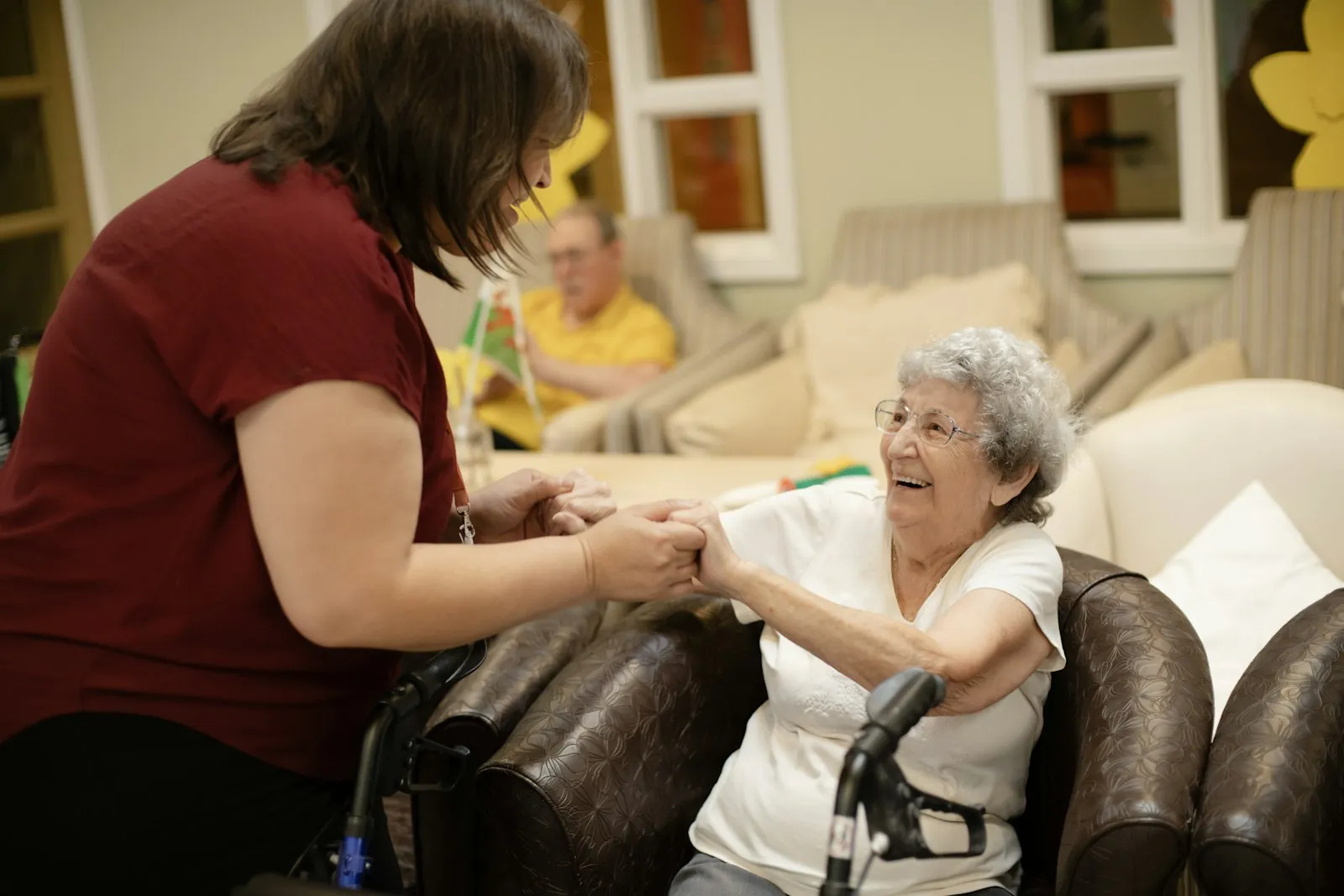
Every resident's day follows their care plan and preferences. A typical day looks something like this:
Morning
Help waking, washing, and dressing. Morning medications and vital checks, then breakfast.
Late morning
Therapy sessions for rehab residents, or group activities and exercise for others.
Midday
Lunch in the dining room or in the resident's room, followed by rest time.
Afternoon
More therapy or activities, visits from family and friends, and afternoon snacks.
Evening
Dinner, evening medications, social time, and help getting ready for bed.
Overnight
Nurses and aides stay on duty all night, checking on residents and responding to calls.
Getting started
The admission process
Most admissions start with a hospital or physician referral, but families can reach out to us directly too. We guide you through every step.
01
Referral & orders
A hospital discharge planner, physician, or family contacts us with diagnoses, medications, and physician orders.
02
Clinical review
Our team confirms we can meet the resident's needs and reviews insurance coverage with you.
03
Required screenings
Federal PASARR screening, and Michigan's Level of Care Determination for Medicaid-funded stays.
04
Paperwork & rights
Admission agreement, insurance cards, advance directives, and a written notice of resident rights.
05
Care plan
A starting care plan within 48 hours, then a full assessment and plan built with the resident and family.
Paying for care
Understanding your options
Most families use a combination of sources. Here's how each one works for nursing home care.
Medicare Part A
Covers short-term skilled nursing and rehab — up to 100 days per benefit period — after a qualifying inpatient hospital stay of at least 3 days. In 2026: days 1–20 cost $0 (after the Part A deductible), days 21–100 cost $217 per day. Medicare does not pay for long-term custodial care.
Medicare Advantage
Plans must cover skilled nursing care, but copays, prior authorization, and the 3-day hospital rule can differ from Original Medicare. Check your plan's terms.
Michigan Medicaid
Pays for long-term nursing home care for people who meet Michigan's Level of Care Determination and income and asset rules. Apply through MDHHS.
Long-Term Care Insurance
Many policies pay a daily benefit for nursing home care after an elimination period. Coverage depends on the policy.
Veterans Benefits
The VA can pay for nursing home care for eligible veterans at facilities that hold a VA contract.
Private Pay
Families may pay directly, or cover costs that other sources don't — such as days beyond Medicare coverage.
Hospital “observation” days don't count toward Medicare's 3-day inpatient requirement, and coverage ends when daily skilled care is no longer needed — so 100 days isn't guaranteed. Medicare figures are for 2026 (source: CMS). Our team will help you understand your coverage before admission.
Safety & oversight
Rights, licensing and protection
Nursing homes are among the most closely regulated places in health care. Here's what protects every resident.
Licensed & inspected
Michigan nursing homes are licensed by LARA's Bureau of Community and Health Systems, which also inspects Medicare- and Medicaid-certified homes for CMS. Inspection results and star ratings are public on Medicare Care Compare.
Resident rights
Residents have the right to dignity and privacy, freedom from abuse and restraints, taking part in care decisions, managing their own money, having visitors, and raising concerns without retaliation.
Free advocacy
The Michigan Long Term Care Ombudsman Program offers free, confidential help with any concern: 866-485-9393. Complaints can also be filed with LARA.
Planning a visit
Questions to ask on your tour
Whether you visit us or anywhere else, these questions help you compare honestly.
- What is your Care Compare star rating, and what did your latest inspection find?
- How many nurses and aides work each shift — including nights and weekends?
- Are you Medicare and Medicaid certified? Can a resident stay if they move from private pay to Medicaid?
- How many days a week is therapy provided, and for how long?
- How often do physicians visit, and who responds after hours?
- How do you prevent falls, pressure injuries, and infections?
- How are families updated and included in care-plan meetings?
- What are your visiting, meal-choice, and personal-belongings policies?
- How do you care for residents living with dementia?
- What does discharge planning look like for rehab residents?
Common questions
Frequently asked
Will Medicare pay for a nursing home stay?
Medicare Part A covers short-term skilled nursing or rehab — up to 100 days per benefit period — after a qualifying inpatient hospital stay of at least 3 days, as long as daily skilled care is needed. It does not pay for long-term custodial care.
What's the difference between rehab and long-term care?
Short-term rehab is goal-focused therapy and nursing to help someone recover and return home, usually over days or weeks. Long-term care is ongoing daily care and supervision for people who can no longer live safely on their own.
Does Medicaid cover nursing home care in Michigan?
Yes, for people who meet Michigan's nursing facility Level of Care Determination and the income and asset rules. Applications go through MDHHS, and our team can point you to the right starting place.
How often does a doctor see residents?
Federal rules require a physician visit at least every 30 days for the first 90 days after admission, then at least every 60 days — and more often whenever a resident's condition changes.
Can family be part of care planning?
Yes. Residents and their chosen representatives have the right to take part in care-plan meetings and to be informed of changes in condition and treatment.
Can hospice care be provided in a nursing home?
Yes. Hospice teams can care for residents in the nursing home, so they can stay in a familiar place with people they know.
Where can I check a nursing home's inspection record?
Inspection results and star ratings for Medicare- and Medicaid-certified nursing homes are published on Medicare Care Compare (medicare.gov/care-compare). Michigan licensing information is available through LARA.
Who do I contact if I have a concern?
Start with the administrator or social worker — we want to know. You can also contact the Michigan Long Term Care Ombudsman at 866-485-9393 or file a complaint with LARA.
Details we'll confirm with you
- [Number of beds and private / shared rooms to be added]
- [Medicare, Medicaid, and insurance plans accepted to be added]
- [Daily private-pay rate to be added]
- [Care Compare star rating and certifications to be added]
- [Visiting hours to be added]
Come see us in person.
Schedule a tour, ask every question on your list, or refer a patient — our team will walk you through next steps.